Deep Memory
Underwater cultural heritage, research milestones, and protection projects along the Algerian coast.
Underwater cultural heritage is one of the most important fields of maritime cultural heritage. In 2001 UNESCO adopted a unified definition of this heritage as "all traces of human existence having a cultural, historical or archaeological character which have been partially or totally under water, periodically or continuously, for at least one hundred (100) years, such as sites, structures, buildings, artifacts and human remains together with their archaeological and natural context, and vessels, aircraft and other vehicles or any part thereof, their cargo or other contents, together with their archaeological and natural context, and objects of prehistoric character...".
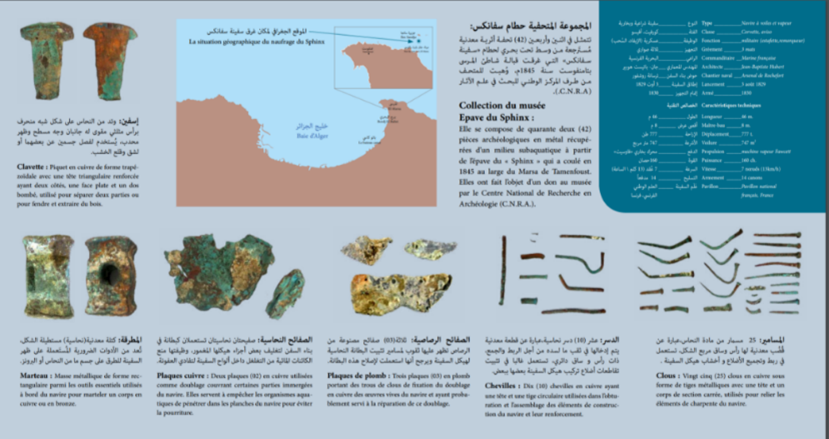
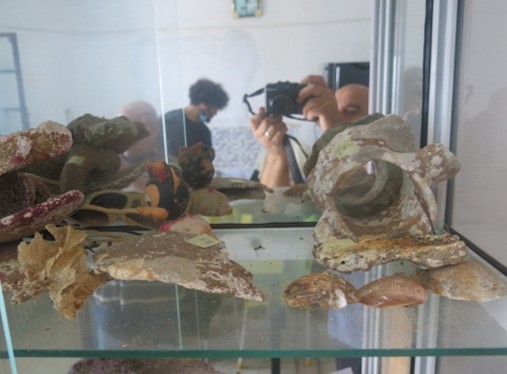
The earliest underwater research and discoveries in Algeria go back to the French colonial period. At first, they were brief reports by diving enthusiasts or by seabed excavations without diving on the sites, the oldest being the discovery of a Galère ship and dozens of amphorae in the port of Cherchell. In 1961, during underwater exploration in the Bay of Annaba by the Harpon-Club de Bône diving team, several discoveries were recorded: archaeological finds, cannons, and a shipwreck. In 1968, the first submerged research on 30 sites along the Algerian coast appeared, led by researchers York and Davidson from the University of Cambridge in England as part of a program on ancient ports in North Africa. In 2005, during a training workshop in underwater archaeological research under the supervision of UNESCO, the University of Malta, and the French Association for Nautical Archaeological Research with participation from the Algerian Ministry of Culture and Navy, within the European program “Euromed – Sailing in Knowledge, several metal artifacts were discovered (the Sphinx shipwreck), preserved at the National Maritime Museum, along with the wreck of a ship carrying ten stone mills from the ancient period on the eastern side of the Bay of Algiers at Tamentfoust.
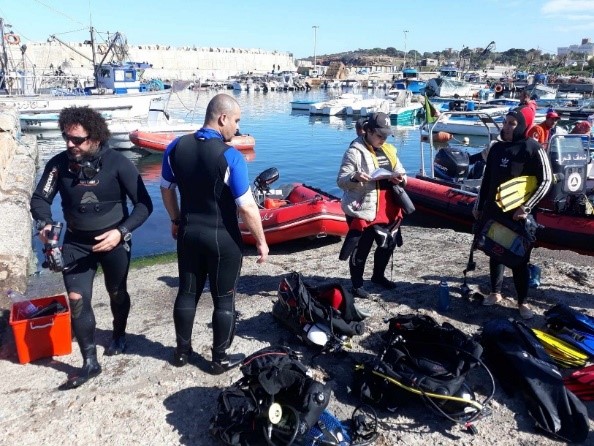
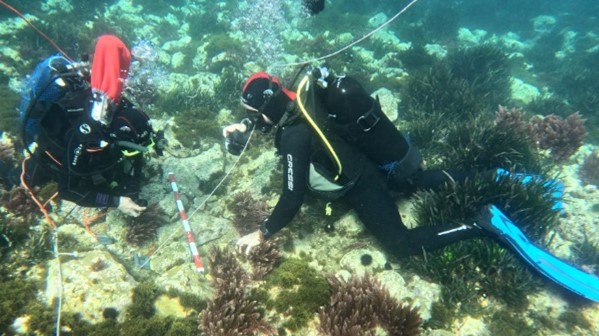
More recently, in 2017, the first interventions on underwater heritage sites were carried out by Algerian divers from the National Maritime Museum. They inventoried and documented several submerged archaeological sites along the Algerian coast: a ship anchor stock at Ramla Beach in Dellys, ten stone mills at El Marsa Tamentfoust Beach, and twenty-three cannons in the Bay of El Hamdania, Tipaza.
Protecting and Preserving Underwater Heritage
To protect this heritage from looting and illegal exploitation, international conventions and national laws have been enacted. Internationally, the 2001 UNESCO Convention on the Protection of the Underwater Cultural Heritage is a key regulatory document for protecting this cultural heritage worldwide, facilitating cooperation between states and setting the necessary professional standards in this field. Algeria ratified it and joined its membership on August 30, 2009.
At the national level, Law 04/98 is the legislative reference for protecting underwater cultural heritage as part of the national cultural heritage.
UNESCO Recommendations for Diving at Underwater Heritage Sites
- Leave shipwrecks and submerged remains in place without disturbing them.
- Obtain authorization to dive at designated sites.
- Only archaeologists may recover artifacts.
- Respect measures aimed at protecting sites.
- Report discoveries to the responsible authorities and hand over recovered objects to the competent authorities.
- Do not sell our shared heritage.
- Use caution when taking photographs.
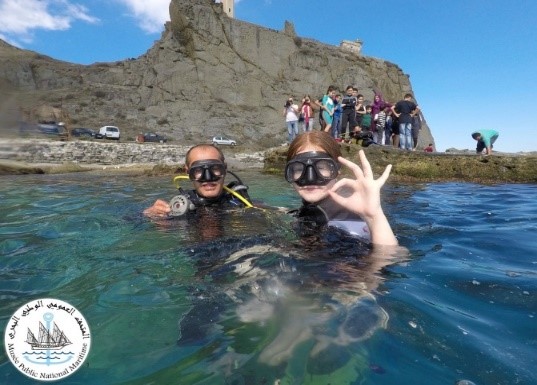
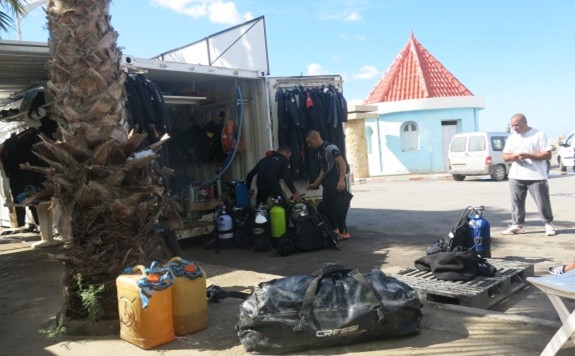
To promote, document, and protect underwater heritage, the museum has programmed awareness campaigns with diving teams and associations to gather, document, and inventory submerged archaeological sites, as well as campaigns to introduce underwater heritage and trial diving workshops for children.
Museum Projects
With a focus on underwater heritage, and as an initial step, the National Maritime Museum formed a team of qualified divers to inventory and document submerged properties and sites, followed by awareness campaigns to introduce this heritage and help create programs and mechanisms to protect and enhance it.
Project to Protect, Inventory, and Enhance the “Ship Anchor Stock”
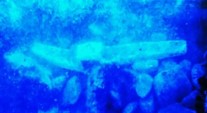
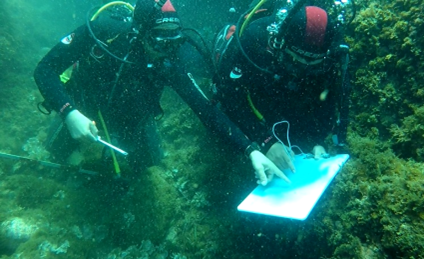
Following a report by Mr. Farid Kremich about an underwater cultural property exposed to attempted theft at Ramla Beach in Dellys, Boumerdes, at a depth not exceeding six meters, the diving team intervened under the supervision of the Ministry of Culture and in coordination with the Dolphin association for maritime diving activities in Dellys, where the property was inventoried and documented.
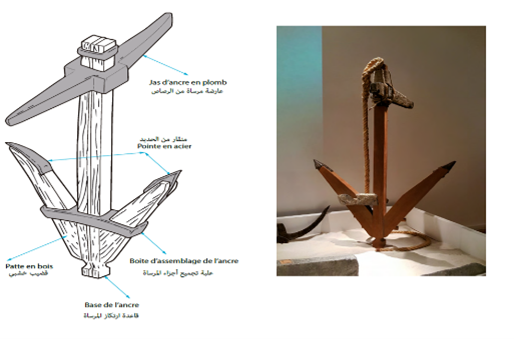
After examination and diagnosis, it was identified as a ship anchor stock made of lead dating to ancient (Phoenician) periods. To protect it from theft attempts, the National Maritime Museum submitted a plan proposing its recovery and transfer to the museum for enhancement and preservation, where research and study phases will continue.
Project to Inventory and Document the Submerged Archaeological Site “Ten Stone Mills”
The site is located off El Marsa Beach in Tamentfoust, east of the Bay of Algiers, at a depth of 1.5 meters and about 50 meters from the shore. It consists of a group of ten circular stone mills, 138 cm in diameter and 38 cm thick. These submerged cultural properties are a ship’s cargo (shipwreck) that preserves the remains of stone mills whose shape and dimensions suggest they were intended for an olive oil press (“Moulin à huile), which appeared in the 5th century BCE and was called “Trapetum by the Romans.
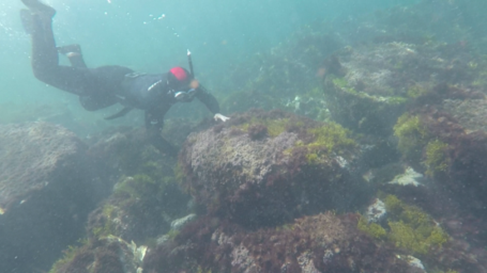
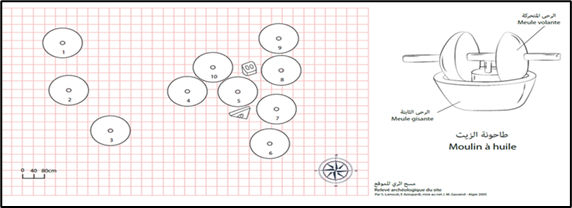
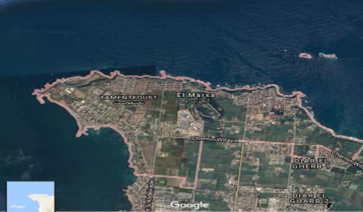
Plan of the “ten mills wreck (GRAN)
Project to Inventory and Document the Submerged Archaeological Site “23 Cannons”
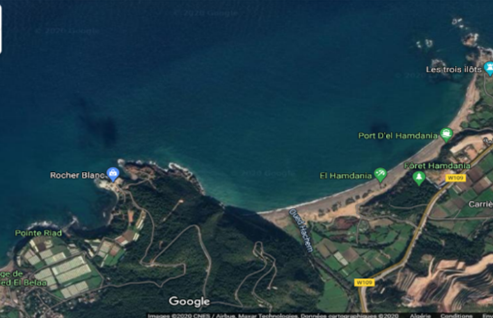
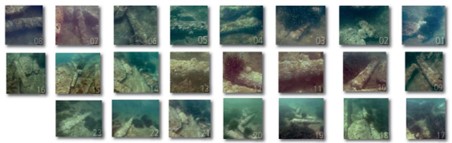
Several academic studies have recorded the presence of a submerged archaeological site with 23 cannons at Rocher Blanc in El Hamdania, Tipaza. Following this, on July 23, 2018, after obtaining a diving permit from the Ministry of Culture, the diving team explored the site, carried out photographic documentation, inventoried and counted the 23 cannons, created technical sheets for each cannon, and produced a general plan of their distribution on the site.
Within the framework of protecting submerged cultural properties located within the construction area of the Central Port at El Hamdania (Cherchell, Tipaza), the National Maritime Museum diving team, in coordination with the National Center for Research in Archaeology, contributes to selecting a suitable submerged archaeological site to relocate and transfer the 23 cannons from their original location.
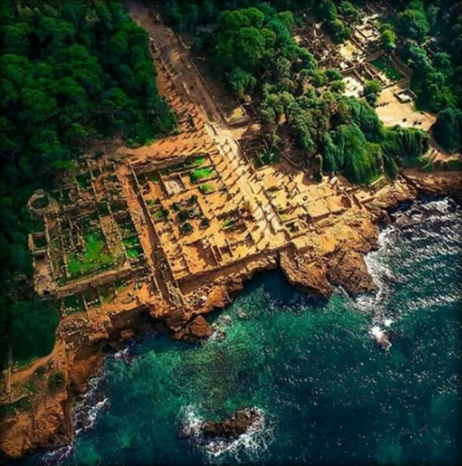
Project “Marine Extension of the Buffer Zone of the Tipaza Archaeological Site”
Following Decision 46COM 7B.25 by the UNESCO World Heritage Committee regarding the state of conservation of the Tipaza archaeological site (Algeria), which “encourages the State Party of Algeria to finalize studies related to the marine extension of the buffer zone as soon as possible...”
The project is under the supervision of the Ministry of Culture and its affiliated institutions (National Center for Research in Archaeology, National Maritime Museum, National Office for the Protection and Exploitation of Protected Cultural Property, and the Directorate of Culture and Arts of Tipaza).
For this purpose, studies on the marine extension of the buffer zone were resumed and underwater survey and prospecting operations were launched for its marine basin, with the museum’s diving team participating within the joint diving team of the institutions involved in this project.